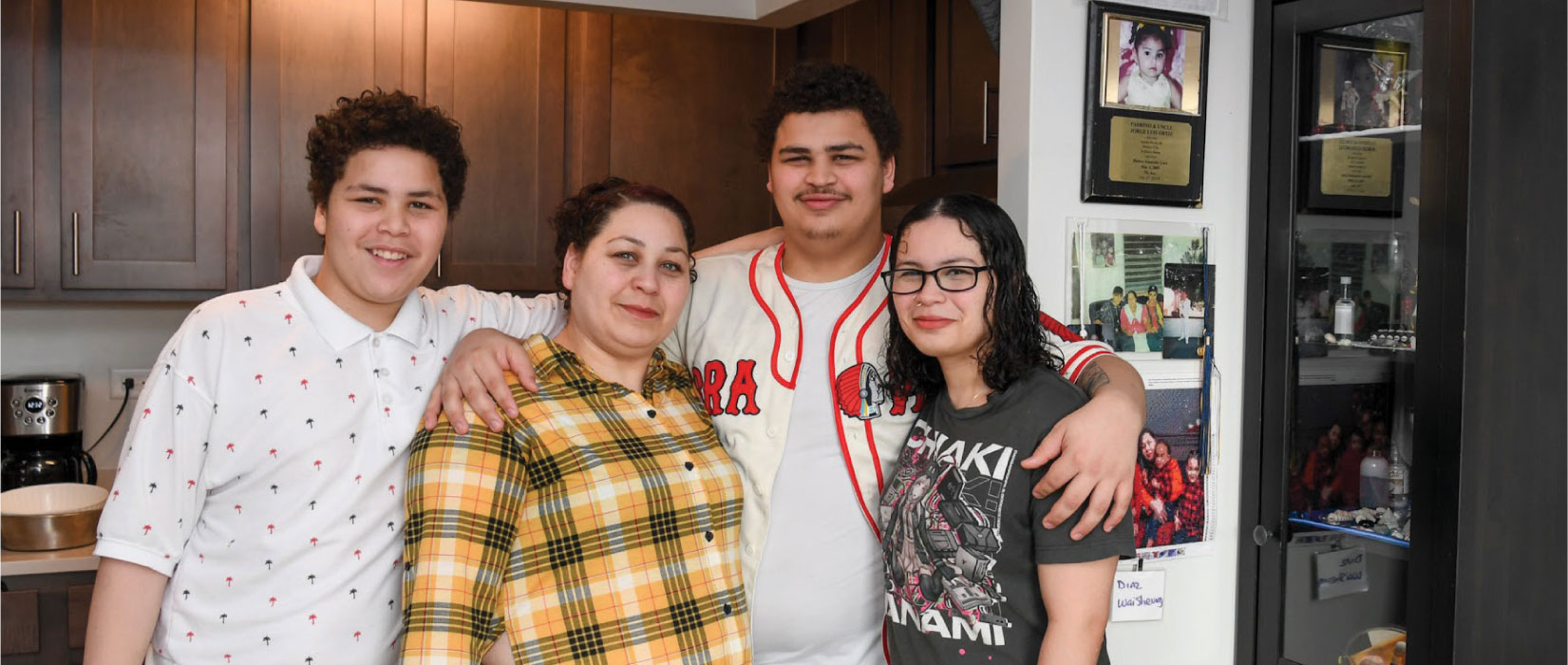
Community Access was founded in 1974 in the Lower East Side of Manhattan, and has expanded into other parts of New York City ever since. Through various transitional and supportive housing programs, we either own, operate, or provide services in 20 buildings and more than 100 scatter-site apartments throughout Manhattan, Brooklyn, and the Bronx. Our more than 1,100 tenants comprise individuals living with psychiatric disabilities, individuals with histories of homelessness and/or incarceration, and low-income working families.
In our permanent housing each tenant holds his or her own lease. Additionally, highly trained on-site service coordinators provide vocational and educational counseling, support for and training in social skills-building, crisis intervention, and assistance in advocating for government entitlement programs.
Our transitional housing program helps people move from shelters and hospitals into the community, through communal learning activities, individual counseling and goal planning, and referrals to outside programs and services. On average, tenants stay six to 18 months in this setting before moving on to more independent housing.Â
>>Click on the maps below to see where these housing programs are located<<
BRONX |
BROOKLYN |
MANHATTAN |

1854 CEDAR AVENUE
A 106-unit mixed tenancy development, with funding that comprised an innovative public-private model, 1854 Cedar Avenue accommodates low-income families and individuals with psychiatric individuals. It was designed by architect Peter L. Woll and constructed by HLS Builders Corp.
| >>Inside Story<<Â "Corporation for Supportive Housing Honors Community Access with National Award" Community Access was recognized for its cutting-edge supportive housing and social services programs, and, in particular, its affordable housing program at 1854 Cedar Avenue. Â Read more>>Â |
1750 DAVIDSON AVENUE
Following Community Access' integrated supportive housing model, 1750 Davidson has 73 studios for people living with psychiatric disabilities and low-income residents. The building was designed by SLCE Architects and built by contractor Vertical Construction.
1022 REVEREND JAMES A. POLITE AVENUE
Co-developed with Community Housing Information Center and designed by architect Wormser + Associates, 1022 Polite has 67 studio apartments for people with psychiatric disabilities and histories of homelessness, and low-income community residents. The contractor for this housing program was Galaxy General Contracting Corp.
1363 FRANKLIN AVENUE
Designed by SLCE Architects and built by HLS Builders Corp., 1363 Franklin is shared by low-income families from the community and individuals living with psychiatric disabilities.
| >>Inside Story<<Â "CoolRoofs the Fix for 'Heat Island' Summers" Eight Community Access buildings, including 1363 Franklin, were painted with white reflective roof coatings in the summer of 2012 - making them more environmentally friendly. Â Read more>>Â |
1710 VYSE AVENUE
Attractive and energy-efficient, 1710 Vyse is the newest addition to Community Access' roster of buildings. Accommodating individuals with psychiatric disabilities, it was designed by SLCE Architects and constructed by Mega Contracting Group LLC.
1189 TINTON AVENUE
Another building co-developed with Community Housing Information Center, 1189 Tinton (also known as 772 East 168 Street) is home for individuals with psychiatric disabilities and histories of homelessness, and low-income community residents. Its contractor was Artec, Inc., and its architect was Peter L. Woll Architects.

551 WARREN STREET
Co-developed with Fifth Avenue Committee, Inc., and managed by FAC, 551 Warren is home to 67 tenants who qualify for low-income housing, many of whom have histories of homelessness and substance abuse. Recipient of the Fannie Mae Foundation's "Maxwell Award for Excellence for Special Needs Housing" (2002), the building was designed by Peter L. Woll Architects, and constructed by Mega Contracting, Inc.
910 DEKALB AVENUE
910 Dekalb was Community Access' second housing site to mix low-income families and individuals living with psychiatric disabilities. It was also the first project we worked on with Dunn Development Corp. Designed by SLCE Architects and built by HLS Builders Corp., the building has been honored with several prestigious awards: The Brooklyn Chamber of Commerce 2006 Building Brooklyn Award for Affordable Housing; the Supportive Housing Network of New York award for Project of the Year (2005); and, the New York State Association for Affordable Housing Project of the Year Award (2004).
| >>Inside Story<<Â "From Homeless to Home with Poochie" Like many other Community Access tenants, before Shelia Santiago had a home to call her own, she didn't have one at all. Â Read more>>Â |

621 WATER STREET (GOUVERNEUR COURT)
Listed on the National Register of Historic Places, Gouverneur Court is a former hospital acquired and renovated by Community Access in the early 1990s, aided by architect Peter L. Woll and contractor Sparrow Construction Corp. In 1993, the building received the Preservation League of New York State award for Affordable Housing and Historic Preservation, and, in 1995, a Fannie Mae Foundation Maxwell Award for Excellence for Special Needs Housing. Its 123 tenants include individuals living with psychiatric disabilities and HIV/AIDS, and low-income community members.
![]() |
ZIP/NEIGHBORHOOD | 10002/Lower East Side |
| FUNDERS | NYC Department of Housing Preservation and Development, Federal Home Loan Bank of New York, National Equity Fund (tax credit syndicator) | |
| OCCUPANCY DATE | 1994 | |
| # OF UNITS | 124 | |
| FEATURES | 24-hour staff, computer room, WiFi, dining room serving breakfast and dinner daily, exercise room, Art Collective workshop, on-site social services, enclosed backyard featuring a fountain donated by the Rhodebeck Charitable Trust |
| >>Inside Story<< "Still Housing the Needy, In a Changed Manhattan" Community Access' restoration of Gouverneur Court was the subject of a New York Times article (by Elizabeth A. Harris, 10/9/12).  Read more>> |
29 EAST 2ND STREET
The first Community Access building to feature commercial space, 29 East 2nd was developed in partnership with Cooper Square Committee, Inc., as part of the Cooper Square Urban Renewal Project. Pratt Planning and Architectural Collaborative designed the building, and Artec Construction and Development Corp. served as contractors.
258 EAST 4TH STREET
Built in partnership with Amie Gross Architects and Sparrow Construction Corp., 258 East 4th was the first building in New York City designed to include both low-income families and individuals living with psychiatric disabilities. In 1994, it received the National Association of Housing and Rehabilitation Officials' "Excellence in Design" award.
109 AVENUE D
The work of architect Becker & Becker Associates and contractor Sparrow Construction Corp., 109 Avenue DÂ is comprised of 45 studio apartments, each with its own kitchen and bath. It is home to individuals living with psychiatric disabilities, individuals with histories of homelessness, and low-income community residents.
190 STANTON STREET
190 Stanton Street is a transitional housing program dedicated to helping people with psychiatric disabilities move from shelters and hospitals into the community and on to the path toward independent living.
![]() |
ZIP/NEIGHBORHOOD | 10002/Lower East Side |
| FUNDER | New York State Office of Mental Health | |
| OCCUPANCY DATE | 2010 | |
| # OF UNITS | 24 | |
| FEATURES | On-site counseling and goal planning, community room, backyard |
220 EAST 7TH STREET (ACCESS HOUSE)
Community Access' first building, Access House is a transitional housing program for 15 formerly homeless individuals with psychiatric disabilities. It has 15 units with shared bathrooms, and a dining room that overlooks an attractive backyard area. Designed by architect Peter L. Woll and built by Monadnock Construction, Inc., the building was named one of the "Top 1000 High Performing Properties" by the US Department of Housing and Urban Development in 2000.
255 EAST BROADWAY
255 East Broadway is a transitional housing program dedicated to helping people with psychiatric disabilities move from shelters and hospitals into the community and on to the path toward independent living.
![]() |
ZIP/NEIGHBORHOOD | 10002/Lower East Side |
| FUNDER | New York State Office of Mental Health | |
| OCCUPANCY DATE | 2010 | |
| # OF UNITS | 14 | |
| FEATURES | On-site counseling and goal planning, community room, backyard |
347 EAST 4TH STREET (LIBBY HOUSE)
Providing transitional housing to 12 individuals living with psychiatric disabilities and histories of homelessness, Libby House prepares tenants for more independent living arrangements. The building was donated to Community Access by Libby Lyon, a stalwart and longtime helper of New York's homeless population who died in 2000. Its architect was Barry Bronfman, and its contractor was Monadnock Construction, Inc.Â
202 WEST 108TH STREET
Built and donated to Community Access by the Clarett Group under the NYC inclusionary housing program, 202 West 108th is home to five couples, at least one of whom lives with a psychiatric disability. Its architect was Beth Cooper Lawrence, and its contractor was Bovis Lend Lease.
CRISIS RESPITE CENTER
Part of Parachute NYC, a "soft-landing," community-based alternative to emergency hospitalization for individuals experiencing psychiatric crises, New York City's first Crisis Respite Center officially opened on January 10, 2013. It provides a friendly, safe, and supportive home-like environment with access to a wide range of recovery-oriented services.
| BOROUGH | Manhattan |
| FUNDERS | NYC Department of Health and Mental Hygiene, Centers for Medicare and Medicaid Services (federal health care innovation grant) |
| OCCUPANCY DATE | 2013 |
| # OF UNITS | 8 |
| FEATURES | 24-hour peer-support, self-advocacy education, self-help training, peer-operated support line. |
| >>Inside Story<<Â "The Launch of Parachute NYC" A citywide initiative, Parachute NYC is projected to reduce health care expenditures by $50 million over the next three years, while also improving the care and health of participants. Â Read more>>Â |

For all of the following housing programs, Community Access provides social services in properties owned and developed by other agencies.
518 WEST 159TH STREET
Through a collaboration with the Community League of the Heights (CLOTH), Community Access provides on-site social services and mentoring at three residential buildings on West 159th. These include our first-ever affordable housing program for young adults aged 18-25 who have been in foster care and are transitioning into life on their own.
| >>Inside Story<<Â "Homework and Hope" For most high school students, being called into the Principal's office usually spells trouble. For Community Access tenant Shareida Spencer, however, it was nothing less than the start of a whole new life. Â Read more>>Â |
3462 & 3480 THIRD AVENUE
Two affordable housing programs - Casa de La Luna and Casa de La Estrella - 3462 & 3480 Third Avenue are home for individuals living with psychiatric disabilities, low-income community members, and working families (Community Access provides social services in 47 of the two buildings' 227 apartments). Thanks in large part to private developer Kiumarz Geula, an honoree at our 2012 Good Neighbor Gala, Casa de La Luna and Casa de La Estrella are now at the heart of a revitalized neighborhood, alongside new businesses and amenities.
![]() |
ZIP/NEIGHBORHOOD | 10456/Morrisania |
| FUNDER | NYC Department of Health and Mental Hygiene (social services) | |
| OCCUPANCY DATE | 2010 | |
| # OF UNITS | 47 | |
| FEATURES | On-site social services |
TREATMENT APARTMENT PROGRAM
Community Access' Treatment Apartment Program (TAP) is a scatter-site transitional housing program that helps 84 individuals with psychiatric disabilities return to a full-time schedule of daily activities, which usually include a mix of job training, volunteer and/or part-time work, education, and ongoing mental health services. TAP residents share apartments in privately owned buildings in the East Village, the Lower East Side, Harlem, and Washington Heights. The program is funded by the New York State Office of Mental Health.
OMH SUPPORTED HOUSING PROGRAM
The OMH Supported Housing Program at Community Access provides spacious studio and one-bedroom apartments in Manhattan, Brooklyn and Queens to 66 individuals with psychiatric disabilities. Of these units, 22 are located at 258 East 4th Street and are integrated with 28 two-bedroom units for low-income families from the community. All tenants hold their own lease and are afforded the opportunity to collaborate with a service coordinator to design an individual person-centered support plan related to maintaining housing, employment, social involvement, and overall health and wellness. The program is funded by the New York State Office of Mental Health.